the troupe
the characters — la commedia dell'arte
Born in sixteenth-century Italy on travelling stages, the Commedia dell'Arte gave the theatre its most vivid masks: cunning servants, talkative doctors, miserly old men and moonstruck lovers.
Each of our characters embodies a city, a region — and its cooking. One after another, they take the stage and compose the regional menu of the moment.


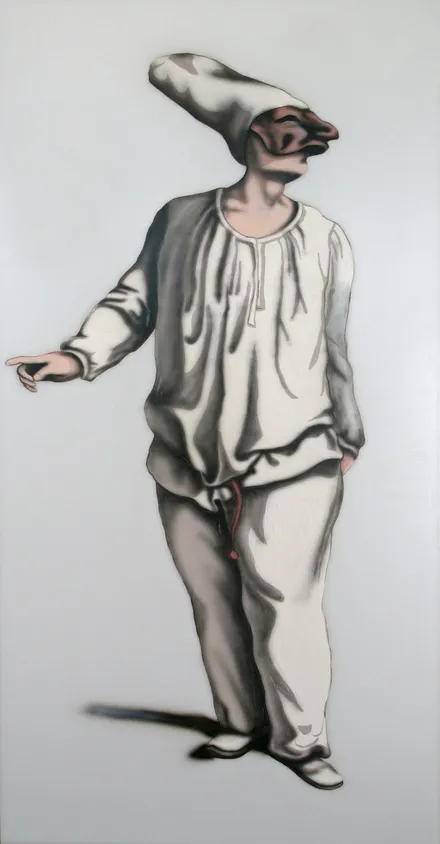
Napoli · Campania
Pulcinella
Born on the Neapolitan stage in the early seventeenth century, from the pen of the actor Silvio Fiorillo, Pulcinella is the soul of Naples made mask: hooked nose, black half-mask, loose white shirt and sugarloaf hat. Lazy yet cunning, melancholy yet quick to laugh, he says out loud what the people only whisper, in a reedy voice nothing can silence. Forever hungry, he dreams only of maccheroni — and will happily eat them with his fingers mid-scene. He carries all the appetite of Campania within him: spaghetti alle vongole fragrant with garlic and the sea, and parmigiana di melanzane, golden and melting like a Neapolitan afternoon.
On their table
- Spaghetti alle vongole
- Parmigiana di melanzane
- Babà al rum
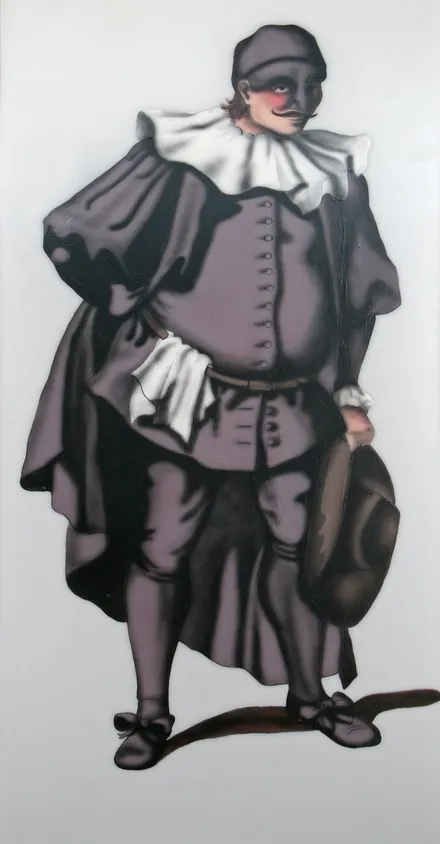
Bologna · Emilia-Romagna
Il Dottor Balanzone
Doctor Balanzone was born in Bologna, in the shadow of Europe's oldest university, whose learning he embodies — in black gown and white collar — a touch too talkatively. This mock scholar of the Commedia dell'Arte, who appeared in the sixteenth century, drowns his audience in tirades stuffed with kitchen Latin, never pausing for breath. Yet beneath the pedant's robe beats the heart of a true Bolognese, more gourmand than erudite. For in Bologna "la Grassa", true wisdom is something you taste: tortellini in brodo folded like little secrets, and tagliatelle al ragù — Emilia's best-learned lesson.
On their table
- Tortellini in brodo
- Tagliatelle al ragù
- Lasagne verdi alla bolognese
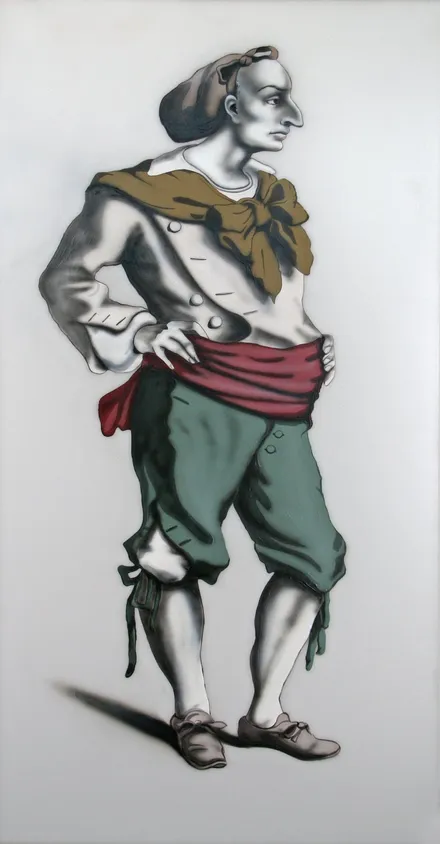
Roma · Lazio
Meo Patacca
Meo Patacca sprang to life in 1695 from the pen of the poet Giuseppe Berneri, who made him the swaggering hero of a poem in Roman dialect. A braggart from Trastevere, as quick to draw his blade as to raise a glass, he musters a band of bravi to relieve besieged Vienna — and ends up toasting the victory in the taverns of Rome. Beneath the swordsman's jacket beat a generous heart and a gift of the gab that is Roman through and through. Like him, the cooking of Lazio is bold and unfussy: bucatini all'amatriciana sharpened with guanciale, and saltimbocca alla romana which, true to its name, "jumps into the mouth".
On their table
- Bucatini all'amatriciana
- Saltimbocca alla romana
- Carciofi alla romana
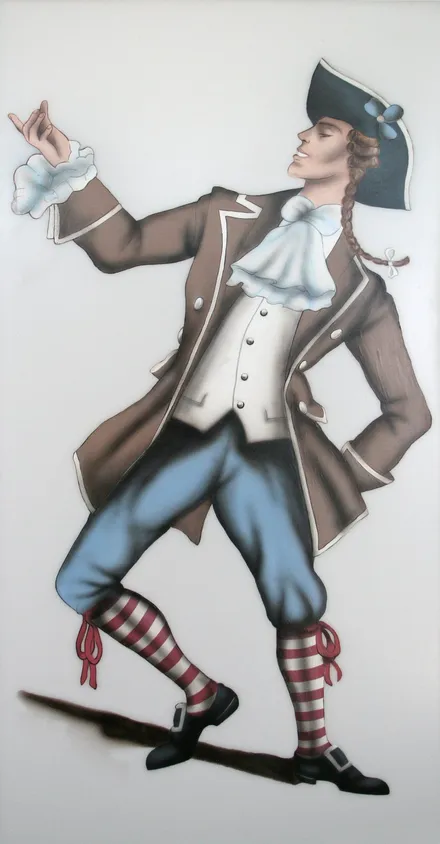
Milano · Lombardy
Meneghino
Meneghino came into the world in Milan at the end of the seventeenth century, in the dialect comedies of Carlo Maria Maggi. His name comes from "Domenichino", the little servant families hired for Sundays; yet this servant performs bare-faced, without a mask, a tricorn on his head and red-and-white striped stockings on his legs. Frank, loyal and irreverent, he became the emblem of the Milanese, embodying their spirit during the Five Days uprising of 1848. His table is just like him, golden and generous: a risotto alla milanese glowing with saffron, followed by an ossobuco that simmers unhurried — all of Milan on a plate.
On their table
- Risotto alla milanese
- Ossobuco alla milanese
- Cotoletta alla milanese
Torino · Piedmont
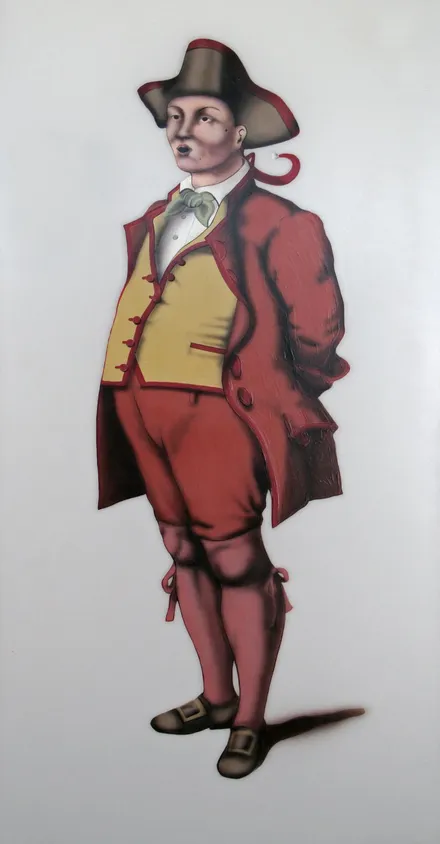
Gianduia
Gianduia was born around 1798 in the hands of the puppeteers Sales and Bellone, who turned this Piedmontese countryman — ponytail wig, tricorn hat and brown jacket trimmed with red — into Turin's mischievous spokesman. His name comes from "Gioan d'la doja", John of the wine jug: a gentleman of good sense who loves good wine and good food. He grew so beloved that in 1865 a hazelnut chocolate took his name: the gianduiotto. Gourmet Piedmont is his mirror, elegant and deep: vitello tonnato under its silky sauce, and tajarin al ragù, fine as golden lace.
On their table
- Vitello tonnato
- Tajarin al ragù di vitello
- Bônet piemontese
in the spotlight right now
Putignano · Apulia
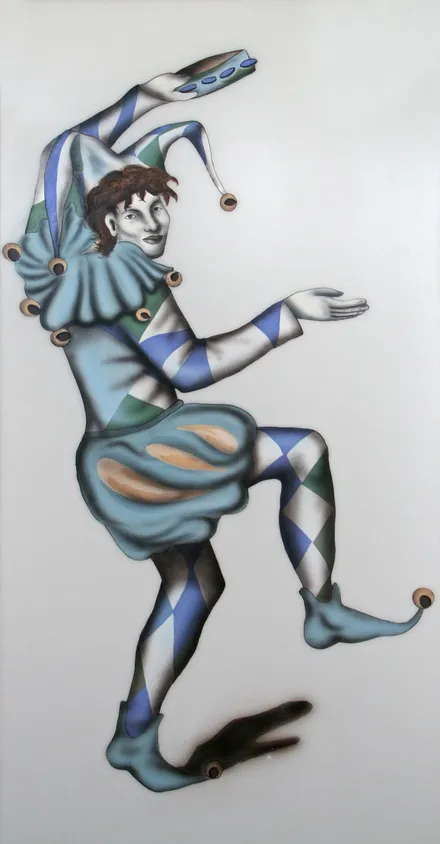
Farinella
Farinella is the child of the Carnival of Putignano in Apulia — one of the oldest in Europe, whose festivities date back to 1394. His name is a gourmand's tribute: farinella is the flour of roasted chickpeas and barley that farm workers once carried to the fields. Dressed in a multicoloured patchwork suit and a cap hung with bells, this bounding jester embodies the infectious joy of the South. It is a joy you can taste in Apulian cooking, simple and sun-drenched: hand-shaped orecchiette alle cime di rapa, and tiella di riso, patate e cozze, baked golden as a feast day.
On their table
- Orecchiette alle cime di rapa
- Tiella di riso patate e cozze
- Burrata di Andria
Sciacca · Sicily
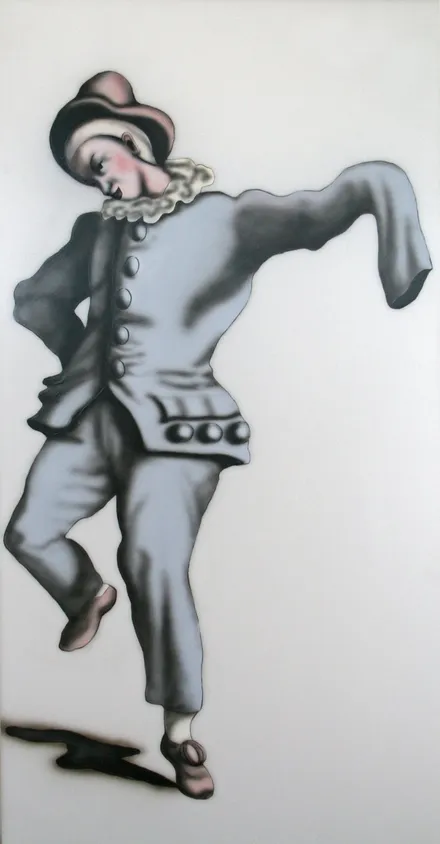
Beppe Nappa
Beppe Nappa is the mask of Sicily: a dreamy, indolent manservant lost in an oversized grey-blue costume with endless sleeves. Forever ready to nap or pilfer a morsel, he springs awake with a prodigious leap the moment food is mentioned. Sciacca crowned him king of its carnival: every year his giant float opens and closes the festivities, which end in a great blaze of celebration. His kingdom is the realm of Sicilian flavours: pasta alla Norma crowned with ricotta salata, and crisp cannoli filled with sweet ricotta — enough to rouse Beppe from the deepest of slumbers.
On their table
- Pasta alla Norma
- Caponata di melanzane
- Cannoli siciliani
Firenze · Tuscany
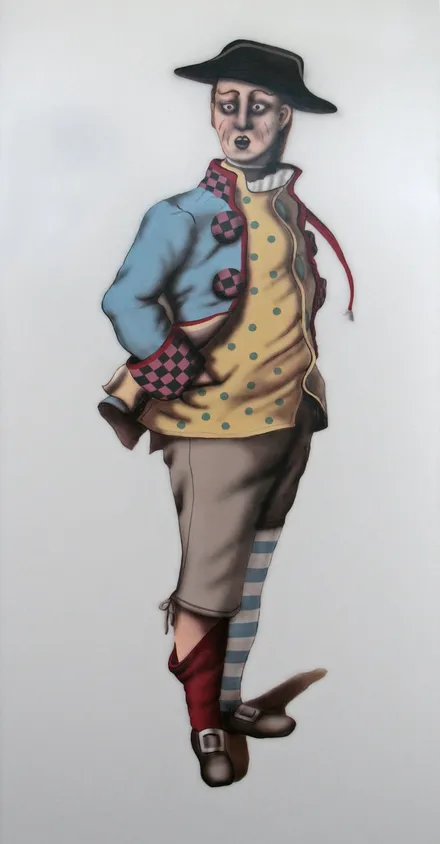
Stenterello
Stenterello, the last-born of the great Italian masks, was created in Florence at the end of the eighteenth century by the actor Luigi Del Buono. Thin as a rake — his name comes from "stento", hardship — he wears a pigtailed wig, a motley coat and two mismatched stockings. Timid yet generous, he defuses every drama with a flash of true Tuscan wit. He takes his revenge on hunger at the Tuscan table: a thick bistecca alla fiorentina seared over the fire, or a ribollita in which yesterday's bread becomes today's treasure.
On their table
- Bistecca alla fiorentina
- Ribollita
- Pappa al pomodoro
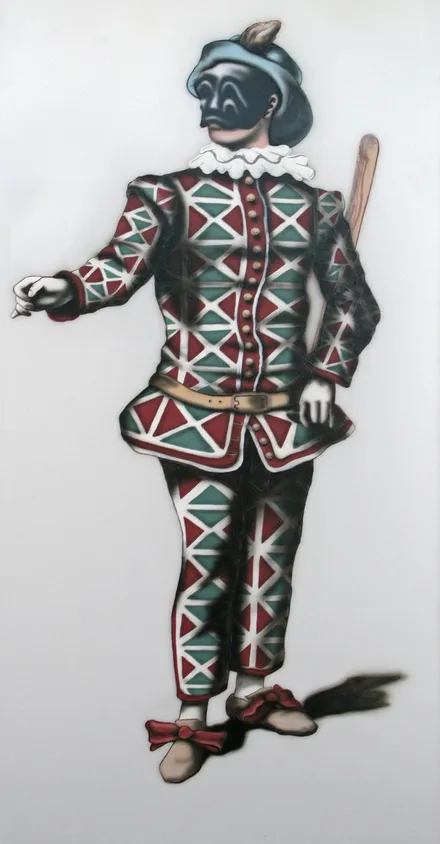
Venezia · Veneto
Arlecchino
Arlecchino, the most famous of the zanni, is a son of Bergamo: a servant come down from the valleys, empty of stomach and never still. His diamond-patterned costume tells his legend — a suit stitched from patches given out of kindness, which became the most dazzling on any stage. Acrobat, ever-hungry, at once naive and cunning, he triumphed at the French court with Tristano Martinelli before serving two masters for Goldoni. And Bergamo knows just how to quiet his legendary appetite: casoncelli alla bergamasca glossed with sage butter, and polenta taragna rich with mountain cheese.
On their table
- Casoncelli alla bergamasca
- Polenta taragna
- Polenta e osei